

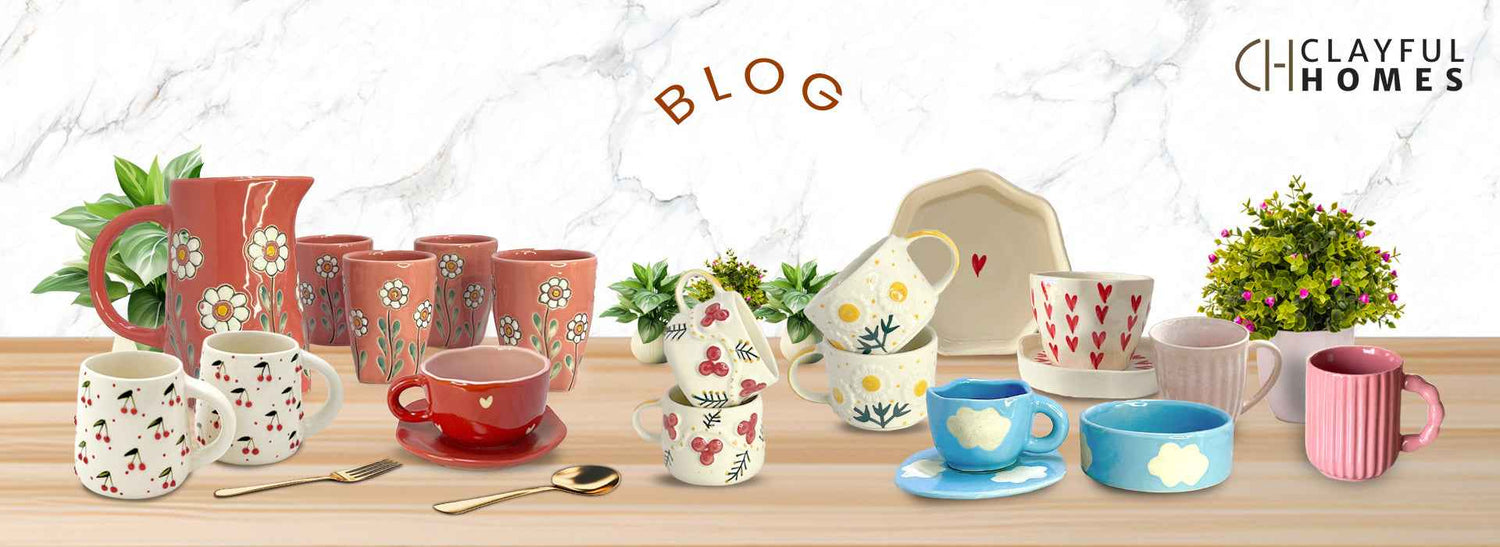
Choosing a soup bowl sounds simple until you compare shallow bowls, deep bowls, cereal bowls and small serving bowls. For Indian homes, the right ceramic soup bowl also needs to work beyond soup: dal, rasam, kadhi, noodles, snacks, desserts and light meals can all benefit from a bowl with useful depth and comfortable handling.
What makes a good ceramic soup bowl?
Start with the shape. A deeper bowl helps retain liquid and reduces spills when carrying soup, dal or rasam from the kitchen to the table. A wider rim gives you room to add toppings, herbs or accompaniments and makes the bowl easier to handle. Ceramic also works well for everyday table settings because it has a substantial feel and pairs naturally with other ceramic dinnerware.
Choosing the right size
For individual soup or dal, a medium bowl is usually the most versatile choice. If you serve larger portions or use the bowl for noodles and one-bowl meals, look for a deeper design with more capacity. Smaller bowls are useful for accompaniments, chutneys, raita and desserts. The key is not to choose by diameter alone: depth and usable capacity matter just as much.
Why set size matters
A set of six can be useful for families, regular hosting and coordinated table settings. Smaller sets work well for couples or smaller households. If your dinnerware is mixed, choose a neutral colour or hand-painted pattern that can sit comfortably alongside your existing plates and serving pieces.
How to use soup bowls for Indian meals
- Dal and rasam: Use a deeper bowl to reduce spills.
- Kadhi: A medium-to-deep bowl works well with rice or roti on the side.
- Noodles and pasta: Wider bowls make mixing and eating easier.
- Snacks: Smaller bowls can hold roasted makhana, nuts or namkeen.
- Desserts: Use a compact bowl for kheer, custard or fruit.
Pairing soup bowls with other ceramic tableware
A bowl becomes more useful when it is part of a simple serving system. Pair individual bowls with ceramic snack plates for starters, chutney or dip bowls for condiments, and a serving platter for shared dishes. This creates a practical table setting without requiring a matching dinner set for every meal.
For example, Clayful Homes currently has an active set of grey hand-painted ceramic soup bowls with spoons. For smaller accompaniments, the Blue Moroccan chutney and dip bowls are a useful companion.
Styling a practical Indian dining table
Keep the main plate as the anchor, place the soup or dal bowl where it is easy to reach, and use small bowls for chutneys, pickles and raita. A ceramic platter can hold shared starters while individual snack plates can keep smaller portions organised. Mixing coordinated ceramic pieces often looks more relaxed and personal than using one perfectly matched set.
Care tips for ceramic soup bowls
Follow the care guidance supplied with the product. Avoid sudden temperature changes, handle hand-painted pieces carefully and use non-abrasive cleaning methods when appropriate. Before buying, check the listing for the exact capacity, dimensions and care instructions instead of assuming that every ceramic bowl has the same properties.
Quick buying checklist
- Check bowl depth as well as diameter.
- Choose capacity based on your usual portions.
- Decide whether you need a single bowl or a family set.
- Check the product's material, care and usage information.
- Consider how the bowl will pair with your existing plates and serving pieces.
Final takeaway
The best ceramic soup bowl is the one that fits your actual meals. For Indian households, versatility matters: a well-sized bowl can move from soup and dal to kadhi, noodles, snacks and desserts. Start with the portion size you serve most often, then build around it with complementary ceramic tableware. That approach gives you a more useful collection and a more cohesive dining experience.


