

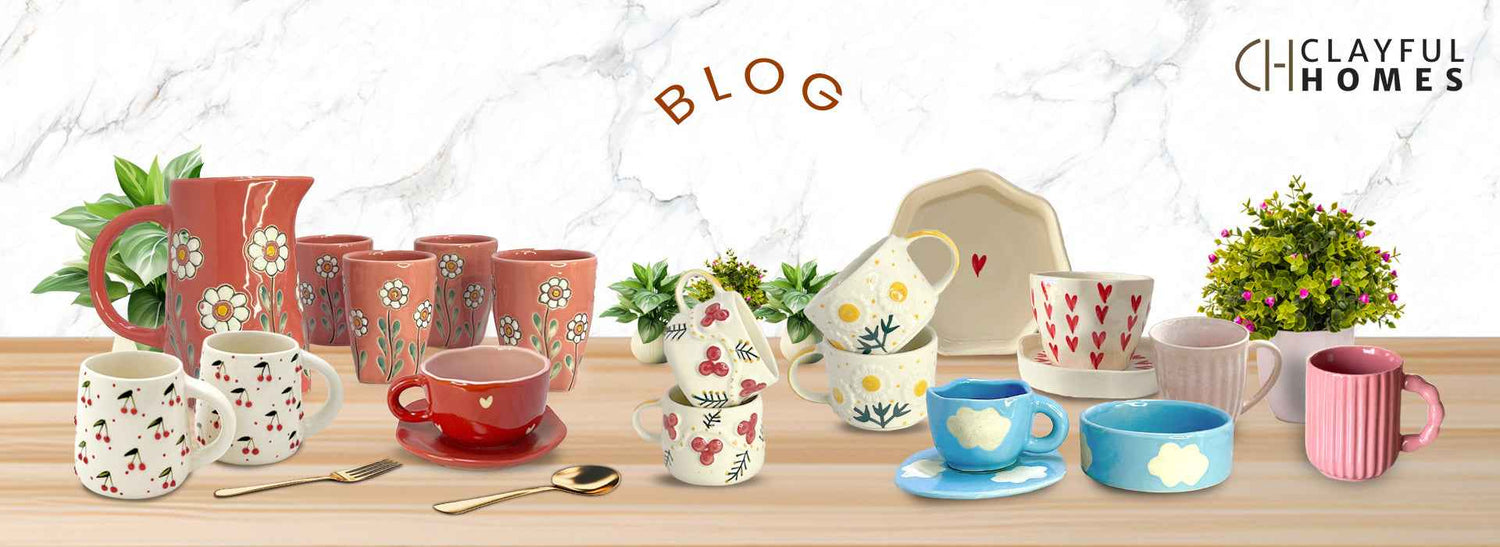
Tea time is one of the easiest occasions to create a beautiful ceramic table setting because the menu can stay simple while the presentation feels thoughtful. The challenge is avoiding a crowded table. With a few versatile pieces, you can serve tea, coffee, snacks and accompaniments comfortably for family or guests.
Start with the number of guests
Before placing anything on the table, estimate how many people will actually sit down. This determines how many mugs, snack plates and small bowls you need. For a small group, a single shared platter may be enough. For a larger gathering, use two serving points so guests do not have to reach across the table.
Choose the main drinkware
Ceramic mugs are useful for tea, coffee and other hot drinks. If everyone is drinking the same beverage, matching mugs create an organised look. If you prefer a relaxed home style, different floral or hand-painted mugs can still work when the colours complement one another.
Clayful Homes has active options such as the Sunflower ceramic coffee mug and the Butterfly ceramic coffee mug set of 2. Use the exact product listing to check current availability and product details.
Use one main snack platter
A shared platter should carry the foods that are easiest for guests to pick up. Sandwiches, biscuits, cutlets, pakoras or small desserts can all work depending on the occasion. Keep the platter accessible from more than one seat when possible.
An active Blue ceramic serving platter with two dip bowls can combine the main serving surface with space for accompaniments.
Add small bowls only where they solve a problem
Small bowls are useful for chutney, dips, nuts, sugar or toppings. They become unnecessary when every food gets its own container. A set of Blue Moroccan ceramic chutney and dip bowls can be useful when the menu includes several condiments.
Create a simple table layout
Keep the centre of the table open enough for guests to see and reach the food. Place the shared platter in the middle, drinkware around the seating positions and small bowls near the foods they accompany. Put spoons and napkins at one or two accessible points rather than scattering them across the table.
Think vertically and visually
Varying heights can make a table look more interesting, but do not use tall decorative pieces that block conversation. A low platter, medium-height teapot and small bowls usually create enough visual variation. If you add flowers or décor, place them at the edge rather than in the centre of the serving area.
Choose a colour story
You do not need a perfect matching dinnerware set. Pick one or two colours that repeat across the table. Blue ceramics can work with white or neutral plates, while floral mugs can add a softer accent. Hand-painted pieces are especially easy to mix when the table has a simple base.
Tea, coffee and snacks for Indian hosting
For an Indian tea-time spread, consider a combination of biscuits, savouries, sandwiches, fruit or a simple sweet. If you serve chutney or a dip, keep it in a small bowl. If sugar or other accompaniments are part of the routine, place them close to the drinkware. The setup should help guests serve themselves rather than create more work for the host.
How many pieces do you really need?
Buy based on real usage. A couple may prefer a two-piece mug set and one shared platter. A family that hosts often may benefit from six mugs and several small bowls. If storage space is limited, prioritise multipurpose pieces that can move between breakfast, tea time and dinner.
Storage after guests leave
A beautiful table is only useful if the pieces are easy to put away. Stack compatible plates and bowls carefully, and give hand-painted or unusual shapes enough protection. Store larger platters where they can be lifted without moving a pile of smaller ceramics first.
Care tips for ceramic tea-time pieces
Always follow the care instructions for each product. Do not assume that a ceramic item is microwave-safe, dishwasher-safe or oven-safe unless the listing says so. Handle mugs by their bodies and handles carefully, and avoid sudden temperature changes that are not supported by the product guidance.
A quick hosting checklist
- Count guests before choosing the number of pieces.
- Choose versatile mugs for tea and coffee.
- Use one or two main platters for shared snacks.
- Add small bowls only for useful accompaniments.
- Keep the centre clear enough for conversation.
- Use complementary colours instead of forcing a perfect match.
- Keep storage and cleanup in mind while setting the table.
Final takeaway
A good ceramic tea-time table is not about using the most pieces. It is about using the right pieces in the right places. Start with drinkware, add one versatile serving platter, then bring in small bowls only when the menu needs them. This creates an inviting Indian hosting setup that feels warm, practical and easy to manage.


