

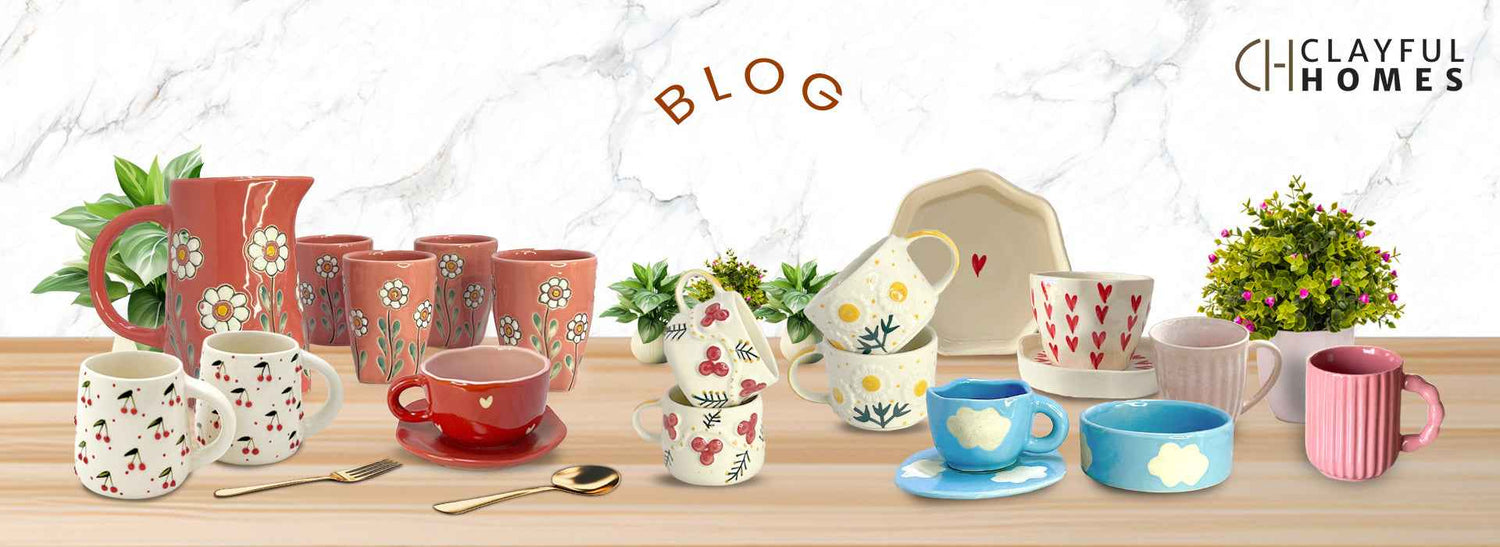
Ceramic kitchen storage jars can make everyday pantry organisation feel simpler because they combine practical storage with a decorative look. Instead of leaving tea, coffee, sugar, spices or dry ingredients in mismatched packets, a coordinated set can create a cleaner visual system on a kitchen counter or open shelf.
Why ceramic jars work well in an Indian kitchen
Indian kitchens often need to store many ingredients used frequently. Tea, coffee, sugar, salt, spices, dry fruits and snacks can all benefit from clearly organised containers. Ceramic jars are particularly useful when you want storage to look intentional rather than purely functional. A hand-painted design can also become part of the kitchen décor.
Choose jars by the ingredient
Think about how often you use an ingredient before choosing the jar size. Daily-use tea or coffee can stay in a convenient countertop jar. Sugar can be kept near the tea and coffee area. Spices that are used repeatedly can have dedicated smaller containers, while dry fruits or snacks may need a larger opening for easy access. The right jar is therefore less about buying the largest size and more about matching capacity to the way you cook.
Keep the tea and coffee area together
A small beverage station is one of the easiest places to use ceramic storage jars. Keep tea, coffee, sugar and frequently used accompaniments together. Add your favourite ceramic mugs nearby and use a small tray to keep spoons and accessories organised. This reduces the number of places you need to search when making a morning drink.
Use storage jars for pantry staples
On a pantry shelf, jars can hold ingredients that are opened regularly. Depending on the product's verified capacity and intended use, they may be suitable for tea, coffee, sugar, dry snacks or other pantry items. Always check the individual product listing for material, capacity and care information rather than assuming all ceramic jars have identical specifications.
How to create zones
Divide your kitchen into simple zones: breakfast and beverages, everyday spices, baking supplies, snacks and dry fruits. Put the ingredients you use most often at an easy-to-reach height. Less frequently used items can stay higher or deeper in the cabinet. This makes a decorative storage system useful as well as attractive.
Make the jars easy to identify
If several jars have similar designs, labels can save time. Use simple labels such as Tea, Coffee, Sugar or Snacks. For open shelving, keep labels subtle so the ceramic design remains visible. For children or guests, clear labels can also make the kitchen easier to navigate.
Combining storage with tableware
A well-organised kitchen does not have to look like a separate storage room. Clayful Homes also has active ceramic tableware that can complement storage pieces. For example, the hand-painted ceramic kitchen storage jars can sit naturally with ceramic mugs, snack plates and serving bowls when you want a coordinated countertop setup.
For serving, consider the Blue ceramic serving platter with dip bowls. For everyday drinks, the Sunflower ceramic mug is another active product that can be used as part of a tea or coffee station.
Countertop or cabinet?
Countertop storage works best for ingredients used every day. Cabinet storage is better for ingredients that need less frequent access or when you prefer a minimal counter. If the jar has a decorative pattern, an open shelf can turn it into part of the room's visual styling. Just keep the most frequently handled pieces where they are easy to lift safely.
Cleaning and care
Follow the care instructions on the product listing. Avoid harsh handling of hand-painted surfaces, and clean with methods appropriate for the specific ceramic finish and seal. If the jar includes a silicone seal or other closure, keep the sealing area clean so the lid can close properly.
A simple weekend pantry reset
- Remove expired or unused ingredients.
- Group similar ingredients together.
- Decide which daily-use ingredients deserve countertop access.
- Match jars to ingredient quantity and frequency of use.
- Label containers where it saves time.
- Keep heavier jars on lower shelves.
- Wipe shelves and containers before returning everything.
Common mistakes to avoid
Do not buy containers solely because they look attractive. Capacity, opening size, sealing design and care requirements matter. Avoid filling every container to the top if the ingredient is difficult to scoop. Also avoid creating too many storage zones: the system should make cooking easier, not give every ingredient a new place that is difficult to remember.
Final takeaway
The best ceramic kitchen storage setup is practical first and decorative second. Start with the ingredients you use every day, choose appropriately sized jars, group related items and keep frequently used products accessible. Once the system works, you can expand it with complementary ceramic mugs, bowls, snack plates and serving pieces. This creates an organised Indian kitchen without sacrificing personality.


